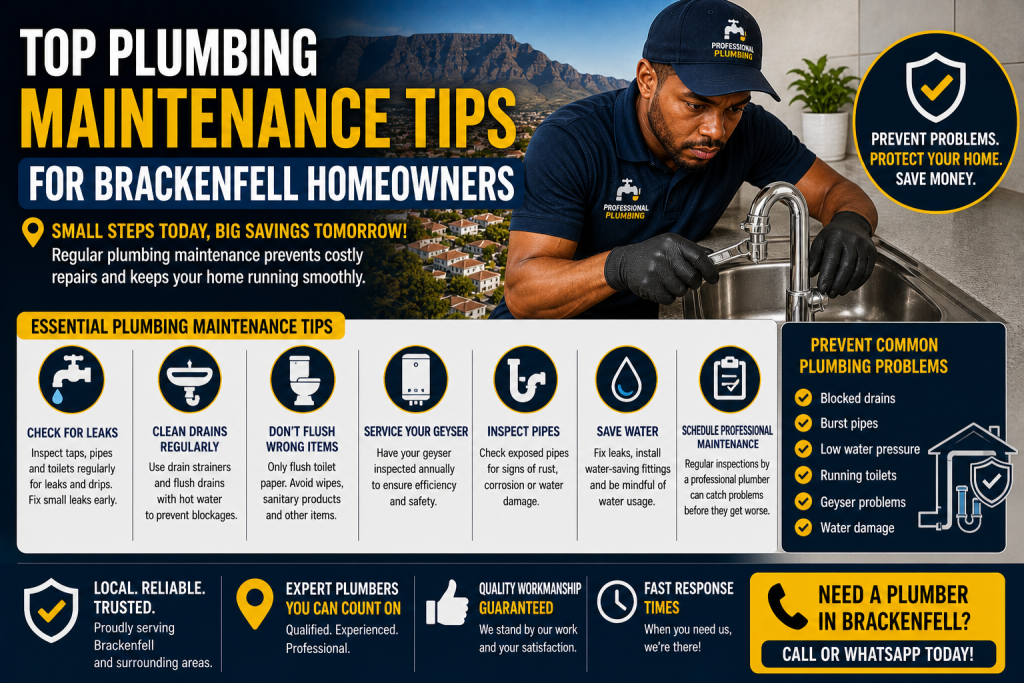
Top Plumbing Maintenance Tips for Brackenfell Homeowners
Good plumbing maintenance can save Brackenfell homeowners from expensive repairs, water damage, blocked drains, burst pipes and geyser problems. Many plumbing emergencies start as small warning signs that are easy to miss, so regular checks are one of the best ways to protect your home.
This guide explains practical steps homeowners can take to keep their plumbing system in better condition. It also shows when a small issue should be checked by a professional plumber before it becomes an emergency.
1. Check for Leaks Regularly
Small leaks are one of the most common plumbing problems in Brackenfell homes. They often start under sinks, behind toilets, near geysers, around outdoor taps or inside cupboards where pipes are hidden from daily view. Although a small drip may not look serious at first, it can waste water, increase your monthly bill and eventually damage walls, cupboards or flooring.
Make it a habit to check under basins, around toilets and near visible pipe connections. Look for damp patches, mould smells, peeling paint, swollen wood or water stains. These are often early signs that a leak is developing.
If you suspect a hidden issue, read our guide on signs of a hidden water leak in Brackenfell. Early detection can prevent bigger repairs later.
2. Keep Drains Clear Before They Block
Blocked drains are often caused by daily habits. In kitchens, grease, oil, food scraps and coffee grounds can stick inside pipes. In bathrooms, hair, soap residue and toothpaste buildup can slowly narrow the drain opening. Over time, water begins draining slower, bad smells develop and eventually the drain may block completely.
To prevent this, avoid pouring cooking oil down the sink. Use drain strainers in showers and basins, and clean them regularly. Also avoid flushing wet wipes, paper towels, sanitary products or cotton buds, as these items do not break down properly in drains.
If your drains are already slow or gurgling, visit our blocked drains Brackenfell service page or read our post on what causes blocked drains in Brackenfell homes.
3. Watch Your Water Pressure
Water pressure that is too high can damage pipes, fittings, taps and geysers over time. Many homeowners only notice pressure problems when taps become unusually forceful, pipes make banging noises, or leaks start appearing around fittings. However, pressure stress can build slowly before any obvious damage appears.
If you notice sudden pressure changes, noisy pipes or frequent leaks, it may be worth getting your system inspected. High water pressure is one of the reasons pipes can weaken and eventually burst.
For urgent pipe damage, see our burst pipe repairs in Brackenfell page. For prevention advice, you can also read how to prevent burst pipes in winter in Brackenfell.
4. Maintain Your Geyser Properly
Your geyser is one of the most important plumbing systems in your home. When it fails, it can leave you without hot water and may cause leaks, ceiling damage or electrical risks. Regular geyser maintenance helps identify pressure problems, worn valves, rust, leaks and faulty components before they lead to a breakdown.
Warning signs include water dripping from the overflow, inconsistent hot water, strange noises, rusty water or visible leaks near the geyser. These signs should not be ignored because geyser problems often get worse with time.
If your geyser is leaking, not heating properly or making unusual sounds, visit our geyser repairs and installation Brackenfell page.
5. Know Where Your Main Water Shut-Off Valve Is
Every homeowner should know where the main water shut-off valve is located. In an emergency, this can make a massive difference. If a pipe bursts or a major leak starts, shutting off the water quickly can reduce flooding and prevent further damage.
Do not wait until an emergency happens to find it. Check your property and make sure everyone in the household knows where the valve is. Also test it occasionally to make sure it still turns properly. If the valve is stuck, damaged or difficult to close, it should be repaired before you need it urgently.
For sudden plumbing emergencies, use our emergency plumber Brackenfell page for fast help.
6. Inspect Outdoor Plumbing and Garden Areas
Outdoor plumbing is easy to forget, but it can cause major problems if ignored. Garden taps, outside pipes, irrigation lines and underground water connections can develop leaks without being noticed immediately. In some cases, homeowners only discover the issue after receiving a high water bill or noticing soggy areas in the garden.
Walk around your property occasionally and check for wet patches, leaking taps, cracked pipes or unusual water pooling. Also check areas near boundary walls, driveways and garden beds where underground pipes may run.
Outdoor plumbing problems are also common in nearby areas such as Kraaifontein and Bellville, especially where older pipe systems or garden root intrusion are involved.
7. Don’t Ignore Small Plumbing Problems
Many expensive plumbing repairs start as small issues. A slow drain, dripping tap, damp cupboard or noisy pipe may not feel urgent, but these problems often point to something developing inside the system. Delaying repairs can increase the final cost and create more damage.
For example, a small leak can become a hidden water damage problem. A slow drain can become a full blockage. A geyser drip can become a larger pressure or valve issue. Therefore, the best maintenance habit is to fix small problems before they turn into emergencies.
You can compare common repair costs in our Brackenfell plumbing cost guide.
When Should You Call a Plumber for Maintenance?
You should call a plumber if a problem keeps coming back, if you notice dampness, if your water pressure changes suddenly, or if you are unsure where a leak or blockage is coming from. Maintenance is not only for emergencies. It is also useful when you want peace of mind before a small issue becomes expensive.
A professional plumber can inspect pipes, drains, geysers, pressure levels and visible fittings. This helps identify risks early and gives you a clearer idea of what needs attention.
For general help, visit our plumbing services Brackenfell page or contact us directly.
Need Plumbing Maintenance in Brackenfell?
Whether you need help with leaks, drains, geysers, burst pipes or general plumbing checks, professional maintenance can help protect your home and reduce costly repairs.
You can also return to the Brackenfell Plumbers homepage to view all services.
Plumbing Maintenance FAQs
How often should I check my plumbing?
Homeowners should do basic visual checks every few months. Look for leaks, damp patches, slow drains, unusual smells and pressure changes. A professional inspection is useful if your home is older or if problems keep returning.
What is the most important plumbing maintenance task?
Checking for leaks is one of the most important tasks because leaks can cause water damage, mould and high water bills. Drain maintenance and geyser checks are also important.
Can plumbing maintenance prevent emergencies?
Yes. While not every emergency can be avoided, regular maintenance reduces the chance of burst pipes, blocked drains, hidden leaks and geyser failures.
Should I use chemical drain cleaners?
It is better to avoid harsh chemical drain cleaners, especially if blockages keep returning. They can damage pipes over time and often do not remove the main cause of the blockage.