BrackenfellPlumbers.co.za • Plumbing Tips • Preventative maintenance
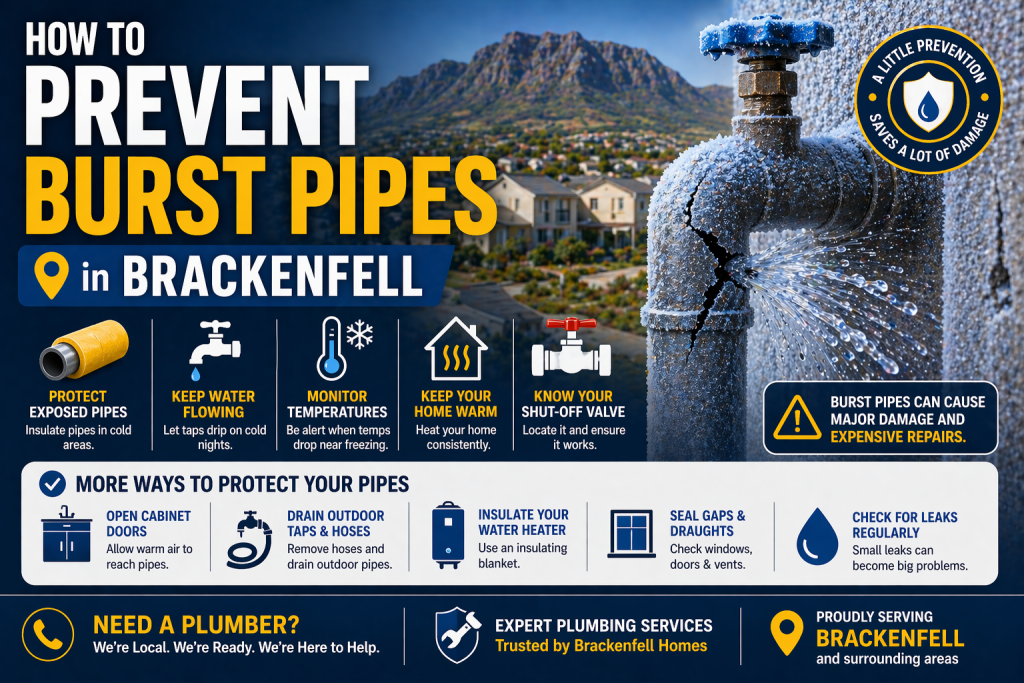
How to Prevent Burst Pipes in Brackenfell
Burst pipes are one of the fastest ways plumbing damage can become expensive. A small crack or weak pipe joint can quickly turn into flooding, damaged ceilings, ruined cupboards, wet flooring, and major repair costs. For homeowners, tenants, landlords, and businesses in Brackenfell, preventing burst pipes early is far better than dealing with emergency water damage later.
Need urgent plumbing help? Call or WhatsApp now.
What Causes Burst Pipes?
Burst pipes usually happen because of pressure, age, corrosion, poor installation, blocked pipes, or small leaks that were ignored for too long. In Brackenfell, older plumbing systems and hidden leaks are often the real cause behind sudden pipe failures.
Sometimes the pipe does not “burst” instantly — it weakens slowly over time until pressure causes failure. That is why prevention matters so much.
Warning Signs Before a Pipe Bursts
Most burst pipes give warning signs first. The problem is that many people ignore them because the damage is still small. Watch for these early signs:
- Unexpected increase in your water bill
- Damp walls, ceilings, or flooring
- Mould or musty smells
- Reduced water pressure
- Noisy pipes or banging sounds
- Wet patches in the garden
- Visible rust, corrosion, or dripping fittings
If you notice these signs, visit Leak Detection in Brackenfell before the problem becomes a major emergency.
How to Prevent Burst Pipes
Prevention is usually simple if handled early. These are the best ways to reduce the risk of burst pipes in Brackenfell homes and businesses:
1. Fix Small Leaks Early
A dripping pipe under a sink or a slow leak behind a wall can create long-term pressure damage. Small leaks should never be ignored.
2. Check Water Pressure
Excessive water pressure puts stress on joints, valves, and older pipes. High pressure is a common cause of repeated plumbing failures.
3. Watch Older Plumbing Systems
Older homes in Brackenfell may have ageing pipework that becomes weak over time. Corrosion, rust, and poor previous repairs can all lead to sudden failures.
4. Prevent Drain Blockages
Severe blocked drains can create pressure problems elsewhere in the plumbing system. Keeping drains clear reduces unnecessary stress on pipes.
5. Inspect Geyser Areas
Geyser pressure issues can also affect connected plumbing lines. Regular geyser checks help prevent both leaks and pipe damage.
What To Do If a Pipe Bursts
If a pipe bursts, act fast:
- Turn off the main water supply immediately
- Switch off electricity if water is near plugs or DB boards
- Move valuables away from the water
- Take photos if insurance may be involved
- Call an emergency plumber quickly
For urgent help, go directly to Emergency Plumber in Brackenfell.
Burst Pipes and Property Damage
Burst pipes often damage far more than the pipe itself. Water can ruin ceilings, built-in cupboards, laminate flooring, carpets, paintwork, furniture, and even structural materials if left too long.
This is why preventative plumbing is cheaper than emergency repairs. Early action protects both your plumbing and your property value.
Helpful Internal Links
Need Help With Pipe Leaks or Burst Pipes?
If you suspect a hidden leak or already have a burst pipe emergency, fast action matters. Contact Brackenfell Plumbers for local help before the damage becomes worse.
Why Burst Pipes Happen More Often Than People Expect
Many homeowners think burst pipes only happen in very old houses, but the truth is they can happen in almost any property if small warning signs are ignored for too long. A pipe does not usually fail without a reason. Pressure builds slowly, joints weaken, fittings corrode, and small leaks quietly create damage until one day the pipe finally gives way.
In Brackenfell, burst pipes are often linked to hidden leaks behind walls, older plumbing systems, outdoor pipe exposure, and drainage pressure problems caused by blocked drains. Even newer homes can experience burst pipe issues if water pressure is too high or poor plumbing repairs were done previously.
One of the biggest mistakes property owners make is assuming that a small drip or slight damp patch is not serious. What looks minor on the surface may be a sign of pressure building deeper inside the plumbing system. By the time the pipe bursts, the repair is no longer just a plumbing job—it becomes a property damage problem too.
This is why preventative maintenance matters so much. Early inspections and small repairs are always cheaper than emergency burst pipe repairs, ceiling restoration, flooring replacement, and mould treatment after flooding.
Landlords and Rental Properties: Burst Pipe Prevention
Rental properties in Brackenfell often experience burst pipe problems because small plumbing issues are reported late. A tenant may notice a dripping pipe, damp smell, or slow drainage but delay reporting it because it does not seem urgent. Unfortunately, that delay can turn a simple repair into a major emergency.
For landlords, burst pipes are expensive because they affect both the property and the tenant relationship. Water damage can lead to damaged cupboards, swollen doors, ruined flooring, stained ceilings, mould growth, and unhappy tenants who cannot use parts of the home normally.
Good landlord prevention includes:
- Encouraging tenants to report leaks immediately
- Checking geyser areas during inspections
- Monitoring repeated drainage complaints
- Watching for unusual water bill increases
- Fixing dripping taps and running toilets early
- Keeping emergency plumber contact details easily available
A fast local plumbing response is one of the best protections for rental properties. Preventing a burst pipe is not only about fixing pipes—it is about protecting the long-term value of the entire property.
Seasonal Plumbing Checks That Help Prevent Pipe Damage
Plumbing should be checked before problems appear, not only after damage happens. Seasonal inspections are one of the easiest ways to reduce burst pipe risk. During colder months, geyser systems work harder and older fittings often show pressure problems first. During wetter months, outdoor drainage systems may reveal weaknesses in underground lines or poor water flow.
Homeowners should regularly inspect:
- Geyser cupboards and ceiling areas for stains or leaks
- Outdoor taps and exposed pipework for cracks or dripping
- Kitchen sink cupboards for slow hidden leaks
- Bathroom walls and floors for dampness or mould
- Garden areas for wet patches caused by underground leaks
- Drainage speed in showers, toilets, and sinks
These simple checks help detect problems before they turn into emergencies. Preventative plumbing saves money because repairs are smaller, cleaner, and far less disruptive than emergency burst pipe call-outs.