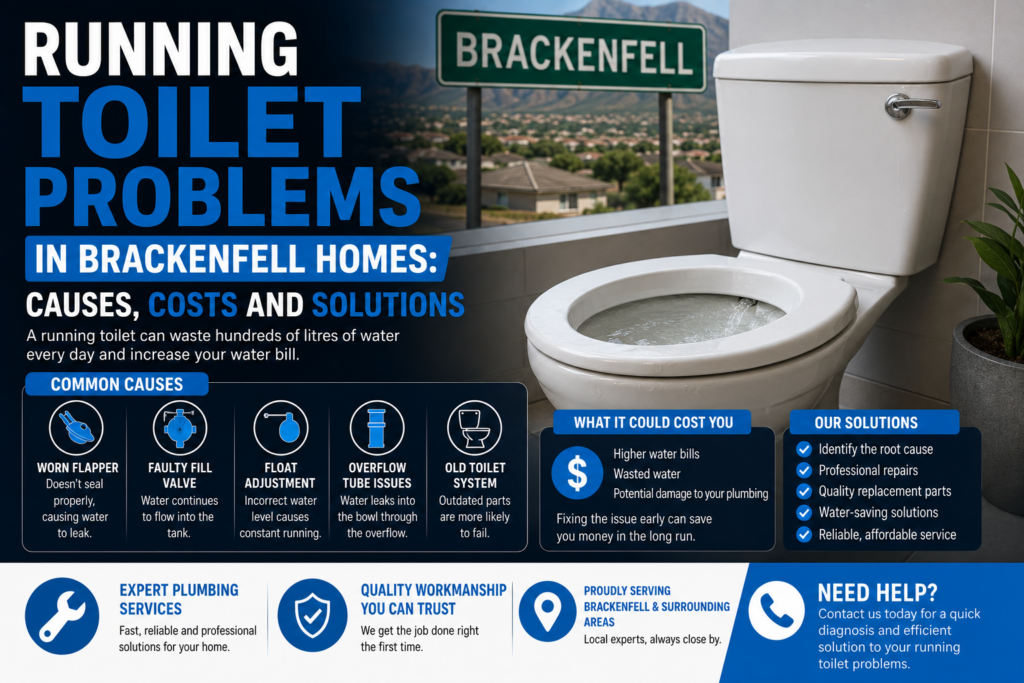
Running Toilet Problems in Brackenfell Homes: Causes, Costs and Solutions
A running toilet might seem like a small annoyance, but it can waste thousands of litres of water every month and significantly increase your municipal water bill. Many homeowners in Brackenfell ignore the problem because the toilet still appears to be functioning normally. Unfortunately, what seems like a minor issue often leads to unnecessary water wastage and more expensive plumbing repairs later.
This guide explains why toilets keep running, how to identify the cause, what repairs may be required, and when it’s time to call a professional plumber.
Why You Should Never Ignore a Running Toilet
Many homeowners assume a running toilet is simply an inconvenience. In reality, it can become one of the biggest sources of water wastage in a home. Even a slow and continuous flow of water into the toilet bowl can waste hundreds of litres every day.
Over the course of a month, this wasted water can significantly increase your municipal account. In some cases, homeowners only discover the problem after receiving a much larger water bill than expected.
Running toilets can also place additional strain on internal components, causing other parts of the flushing mechanism to wear out faster. The longer the issue continues, the more likely it becomes that additional repairs will be required.
If you’ve recently noticed a higher water bill, you may also want to read our Brackenfell Plumbing Cost Guide.
The Most Common Cause: A Faulty Flapper Valve
The flapper valve is one of the most common causes of a running toilet. This rubber component sits at the bottom of the cistern and controls the release of water into the bowl during flushing.
Over time, the rubber deteriorates, becomes warped, or develops mineral buildup. When this happens, the valve no longer creates a proper seal. Water continuously leaks from the cistern into the toilet bowl, causing the refill system to keep adding more water.
Many homeowners do not realise that this small component can waste a significant amount of water. Fortunately, it is usually one of the simpler toilet repairs when identified early.
Problems With the Float Mechanism
The float mechanism controls the water level inside the cistern. When functioning correctly, it stops water from entering the tank once the correct level is reached.
If the float becomes damaged, incorrectly adjusted, or stuck, water may continue flowing into the cistern. Excess water then escapes through the overflow system, creating the sound of a constantly running toilet.
This issue is common in older toilets and can often develop gradually. Homeowners may notice the sound becoming more frequent before the toilet begins running continuously.
Mineral Buildup and Ageing Toilet Components
As plumbing systems age, mineral deposits from water can accumulate on internal toilet components. These deposits interfere with moving parts and prevent the flushing system from operating correctly.
Older toilets in Brackenfell homes are particularly susceptible to this problem. Components that once moved freely may begin sticking or fail to seal properly. This results in constant water movement inside the cistern.
In some cases, replacing worn components restores proper operation. In others, replacing the entire flushing mechanism may be more cost effective.
How Much Water Can a Running Toilet Waste?
Many people are shocked to learn just how much water a running toilet can waste. Depending on the severity of the fault, a toilet may waste hundreds or even thousands of litres per month.
Even a small continuous leak can add up quickly. This unnecessary water usage directly affects your monthly costs and places additional strain on local water infrastructure.
Because of this, running toilets should be treated as a plumbing issue that requires attention rather than something that can be postponed indefinitely.
Can a Running Toilet Cause Other Plumbing Problems?
While the toilet itself may still appear functional, ongoing water loss can sometimes indicate broader plumbing concerns. Excessive water usage may hide leaks elsewhere in the system or make it more difficult to identify other issues.
Some homeowners discover hidden plumbing problems only after investigating a running toilet. For this reason, it is worth inspecting the entire bathroom plumbing system when repairs are carried out.
If you suspect additional issues, visit our Leak Detection Brackenfell page for more information.
When Should You Call a Professional Plumber?
While some toilet repairs are relatively simple, many homeowners find that the problem returns after a temporary DIY fix. If the toilet continues running despite adjustments, professional diagnosis is recommended.
A plumber can identify worn components, test the flushing mechanism, inspect related plumbing systems, and ensure the repair is completed correctly the first time.
Professional repairs also help prevent repeat problems and unnecessary water wastage in the future.
Running Toilet Problems in Brackenfell Homes
Across Brackenfell, many homeowners experience toilet problems due to ageing plumbing systems, worn flushing components, and normal wear and tear. Similar issues are also common in nearby suburbs such as Bellville and Kraaifontein.
Addressing these issues early helps reduce water wastage, lower monthly bills, and prevent more expensive repairs later.
Need Help Fixing a Running Toilet in Brackenfell?
Stop wasting water and avoid unnecessary costs. Get professional help diagnosing and repairing your toilet today.
Visit our Brackenfell Plumbers Homepage for more services.
Running Toilet FAQs
Can a running toilet increase my water bill?
Yes. A running toilet can waste large amounts of water and significantly increase monthly costs.
Can I repair a running toilet myself?
Some simple issues can be fixed at home, but recurring problems usually require professional diagnosis.
How quickly should I fix a running toilet?
As soon as possible. The longer it runs, the more water and money are wasted.