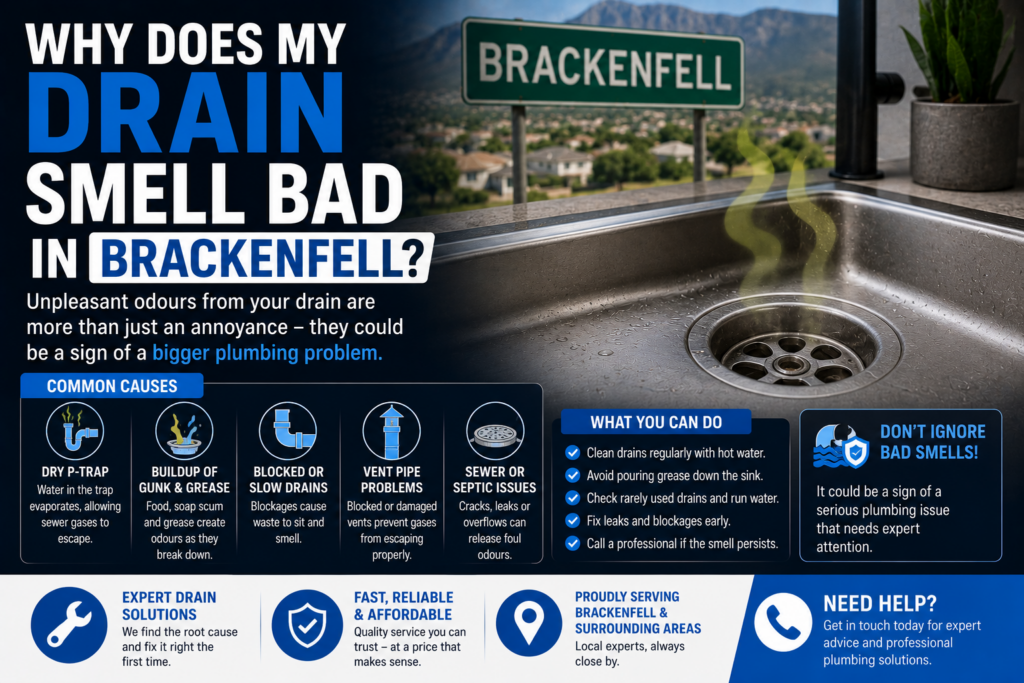
Why Does My Drain Smell Bad in Brackenfell?
A bad smell coming from a drain is one of the most unpleasant plumbing problems homeowners can experience. Whether the smell comes from a kitchen sink, bathroom basin, shower drain, laundry area, or outdoor drain, it often indicates that something within the drainage system is not functioning properly.
While some odours are caused by simple maintenance issues, others may point to developing blockages, sewer gas problems, pipe damage, or hidden plumbing faults. Understanding the source of the smell is the first step toward solving the problem properly.
This guide explains the most common reasons drains develop unpleasant odours, how to identify the source, and what can be done to eliminate the problem permanently.
Food Waste and Organic Buildup Inside Kitchen Drains
Kitchen drains are one of the most common sources of unpleasant odours. Every day, small amounts of food waste, cooking oil, grease, coffee grounds, sauces, and other organic materials enter the sink. Although most of these materials wash away, some stick to the inside of the pipes.
Over time, this buildup begins decomposing. As bacteria feed on the organic matter, unpleasant smells develop and eventually travel back up through the drain opening. This process often happens gradually, meaning homeowners may only notice the smell once significant buildup has accumulated.
Grease is particularly problematic because it hardens inside the pipe and traps additional debris. This not only creates odours but also increases the risk of a future blockage.
Regular drain maintenance and proper disposal of food waste can significantly reduce the likelihood of these smells developing.
Blocked Drains Often Produce Strong Odours
One of the strongest indicators of a developing blockage is a bad smell coming from the drain. When water and waste cannot move through the drainage system properly, debris begins collecting inside the pipe.
This trapped material becomes a breeding ground for bacteria. As decomposition continues, strong odours develop and become increasingly noticeable inside the home.
Many homeowners notice that the smell worsens after running water, using the dishwasher, taking a shower, or flushing a toilet. This is because airflow inside the drainage system pushes the odours toward the drain opening.
If the smell is accompanied by slow drainage, gurgling sounds, or recurring blockages, professional cleaning may be required. You can learn more on our Blocked Drains Brackenfell page.
Dry P-Traps Can Allow Sewer Gases Into Your Home
Every sink, shower, bath, and floor drain contains a P-trap. This curved section of pipe is designed to hold a small amount of water at all times. The water acts as a seal that prevents sewer gases from travelling back into the home.
When a drain is used regularly, the trap remains full. However, drains that are rarely used may dry out over time. Once the water seal disappears, sewer gases can enter the property and create a strong unpleasant smell.
This problem is especially common in guest bathrooms, laundry rooms, outdoor drains, and vacant properties. Fortunately, the solution is often simple. Running water through the drain for a few minutes usually restores the seal.
If the smell returns quickly, additional inspection may be required.
Hidden Plumbing Leaks Can Contribute to Bad Smells
Not all drain odours originate directly from the drain itself. Hidden plumbing leaks behind walls, beneath floors, or inside ceilings can create damp conditions that encourage mould and bacterial growth.
Many homeowners initially describe these smells as sewage-like, musty, or damp. Because the leak is hidden, locating the source can be difficult without professional equipment.
Other warning signs may include damp walls, peeling paint, mould growth, or unexpectedly high water bills.
If you suspect a leak may be contributing to the smell, visit our Leak Detection Brackenfell page.
Ventilation Problems Inside the Drainage System
Your drainage system relies on ventilation pipes to regulate air pressure and safely release sewer gases above the roofline. When these vents become blocked, damaged, or restricted, the system cannot function correctly.
Pressure imbalances can develop inside the pipes, causing sewer gases to escape through drains rather than through the designated vent system.
Ventilation issues are often more complex than simple blockages and may require professional inspection to diagnose correctly. In some cases, birds, leaves, debris, or structural damage may be responsible.
Outdoor Drains and Stormwater Systems
Outdoor drainage systems can also develop unpleasant smells. Leaves, dirt, mud, grass clippings, and organic debris often collect inside outdoor drains and stormwater channels.
As this material decomposes, odours develop. During warmer weather, the smell can become even stronger.
Regular cleaning of outdoor drains helps maintain proper water flow while reducing the likelihood of unpleasant smells and future blockages.
This is particularly important during the rainy season when blocked stormwater systems can contribute to flooding around the property.
How to Prevent Drain Smells in Your Home
Preventative maintenance is one of the best ways to avoid unpleasant drain odours. Small habits can make a significant difference over time.
- Avoid pouring grease down kitchen sinks
- Use drain strainers to catch food and hair
- Flush rarely used drains occasionally
- Clean drains regularly
- Address slow drainage early
- Schedule professional drain cleaning when needed
These simple measures help keep your drainage system functioning properly while reducing the likelihood of future smells and blockages.
When Should You Call a Plumber for Smelly Drains?
If unpleasant smells persist despite cleaning and maintenance, professional diagnosis is recommended. Persistent odours often indicate an underlying issue that cannot be resolved with household cleaning products alone.
A plumber can inspect the drainage system, identify hidden blockages, test ventilation systems, locate leaks, and recommend the most effective solution.
Addressing the problem early often prevents larger drainage issues and more expensive repairs later.
Drain Smells in Brackenfell Homes
Drain odours are a common complaint among homeowners throughout Brackenfell, particularly in older properties where pipe systems have experienced years of use. Similar issues are also common in nearby suburbs such as Bellville, Kraaifontein, and Kuils River.
Fortunately, most drain smell problems can be resolved once the root cause is identified and corrected properly.
Need Help With Smelly Drains in Brackenfell?
Stop living with unpleasant drain odours. Professional diagnosis can identify the cause and restore your plumbing system to proper working order.
Visit our Brackenfell Plumbers Homepage for more services.
Smelly Drain FAQs
Why does my kitchen drain smell bad?
Food waste, grease, and organic buildup inside the pipe are common causes.
Can a blocked drain cause bad smells?
Yes. Trapped waste and bacteria inside blocked pipes often create strong odours.
Are drain smells dangerous?
Some smells may indicate sewer gases or plumbing faults and should be investigated if persistent.