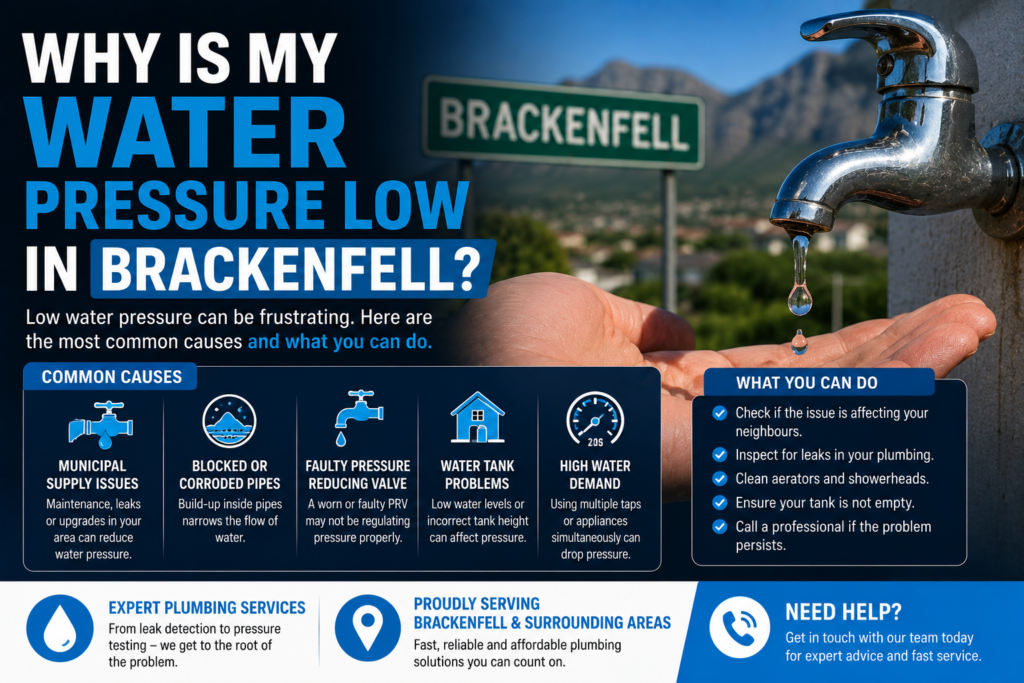
Why Is My Water Pressure Low in Brackenfell?
Low water pressure can turn simple daily tasks into frustrating experiences. Whether you’re trying to shower, wash dishes, fill a bath, or water your garden, poor water pressure affects convenience and may indicate an underlying plumbing issue that requires attention.
Many Brackenfell homeowners experience water pressure problems at some point. While some causes are relatively minor, others can point to hidden leaks, pipe damage, blockages, or issues within the property’s plumbing system.
How Water Pressure Works in Your Home
Before diagnosing a problem, it helps to understand how water pressure works. Municipal water enters your property through a main supply line and is distributed throughout your plumbing system. Pressure is what pushes water through pipes and allows it to flow from taps, showers, toilets, washing machines, dishwashers, and outdoor taps.
When pressure drops, something is usually restricting flow, allowing water to escape, or reducing the amount of water reaching your fixtures. The problem may affect a single tap, one area of the house, or the entire property.
Determining whether the problem affects one fixture or every fixture is often the first clue in finding the source of the issue.
Hidden Leaks Are One of the Most Common Causes
One of the most common reasons for low water pressure is a hidden leak somewhere in the plumbing system. When water escapes through a damaged pipe, less water reaches your taps and fixtures.
Hidden leaks are particularly dangerous because they often develop behind walls, beneath floors, inside ceilings, or underground. Homeowners may not realise a leak exists until they notice low pressure, damp patches, mould growth, or unusually high water bills.
Even a relatively small leak can have a significant effect on pressure throughout the home. The longer the leak remains undetected, the greater the potential damage to your property.
If you suspect a leak, read our guide on Signs You Have a Hidden Water Leak in Brackenfell for additional warning signs.
Blocked or Partially Blocked Pipes
Over time, pipes can become restricted by mineral buildup, corrosion, sediment accumulation, or debris. This narrows the internal diameter of the pipe and limits water flow.
Older homes in Brackenfell are particularly vulnerable because ageing plumbing systems often develop corrosion internally. As the buildup increases, pressure gradually decreases and homeowners may notice weaker flow from taps and showers.
In some cases, blockages only affect certain areas of the property. For example, a blocked pipe feeding a bathroom may cause low pressure there while the kitchen still operates normally.
Pipe restrictions can also contribute to recurring plumbing issues such as leaks and burst pipes because pressure becomes uneven throughout the system.
Faulty Pressure Reducing Valves
Many homes have pressure reducing valves designed to control incoming municipal water pressure. These devices help protect plumbing systems from excessive pressure that could damage pipes and fittings.
However, when a pressure reducing valve begins to fail, it may reduce pressure too much. Homeowners often notice that every tap in the house suddenly has weaker flow than before.
A faulty valve may also cause pressure fluctuations where water pressure changes throughout the day without any obvious reason.
Diagnosing valve issues often requires professional testing because the symptoms can resemble several other plumbing problems.
Municipal Water Supply Problems
Sometimes the issue isn’t within your home at all. Municipal maintenance work, pipe repairs, water restrictions, or supply disruptions can temporarily reduce pressure in an entire area.
If several neighbours are experiencing the same issue at the same time, it may indicate a municipal supply problem rather than a fault on your property.
Before assuming the issue is internal, ask nearby residents whether they are experiencing similar pressure problems. This simple step can save time and help narrow down the cause.
Low Water Pressure in Only One Tap or Fixture
If only one tap or shower is affected, the problem is often localised rather than affecting the entire plumbing system.
Common causes include:
- Blocked tap aerators
- Sediment buildup inside showerheads
- Faulty mixer cartridges
- Localised pipe restrictions
- Worn plumbing fittings
In many cases, cleaning or replacing the affected component restores normal water flow. However, recurring problems may indicate a deeper issue within the pipe supplying that fixture.
Can High Water Bills and Low Pressure Be Connected?
Yes. One of the strongest indicators of a hidden leak is the combination of low water pressure and an unexpectedly high water bill.
When water escapes from the plumbing system before reaching your fixtures, pressure drops while water usage increases. Many homeowners only discover hidden leaks after noticing a dramatic increase in their monthly municipal bill.
If you’ve experienced both symptoms, it’s worth reviewing our Plumbing Cost Guide for Brackenfell and arranging a leak inspection.
What You Can Check Before Calling a Plumber
Before arranging professional assistance, there are a few simple checks you can perform:
- Determine whether the issue affects one fixture or the whole house
- Check whether neighbours are experiencing similar problems
- Inspect visible pipes for leaks
- Look for damp patches or mould
- Clean tap aerators and showerheads
- Review recent water bills for unusual increases
These checks often provide useful information that helps identify the cause more quickly.
When Should You Call a Professional Plumber?
If the pressure problem persists, affects multiple fixtures, or is accompanied by leaks, dampness, unusual sounds, or high water bills, professional assistance is recommended.
Plumbers have specialised equipment that can test pressure levels, locate hidden leaks, inspect pipe systems, and identify problems that are not visible from the surface.
Delaying repairs can allow small issues to become much larger problems. What begins as low water pressure today may eventually lead to water damage, burst pipes, or extensive plumbing repairs.
You can also visit our Plumbing Services Brackenfell page to learn more about available solutions.
Need Help With Low Water Pressure in Brackenfell?
Whether the problem is caused by a leak, blocked pipe, faulty valve, or hidden plumbing issue, professional diagnosis can save time and prevent costly damage.
Low Water Pressure FAQs
Can a hidden leak cause low water pressure?
Yes. Hidden leaks are one of the most common causes of reduced pressure because water escapes before reaching your fixtures.
Why is my shower pressure lower than my taps?
This may be caused by a blocked showerhead, sediment buildup, or a localised plumbing issue affecting that fixture.
Should I worry about sudden pressure loss?
Yes. Sudden pressure loss can indicate a leak, pipe damage, valve problem, or municipal supply issue and should be investigated.